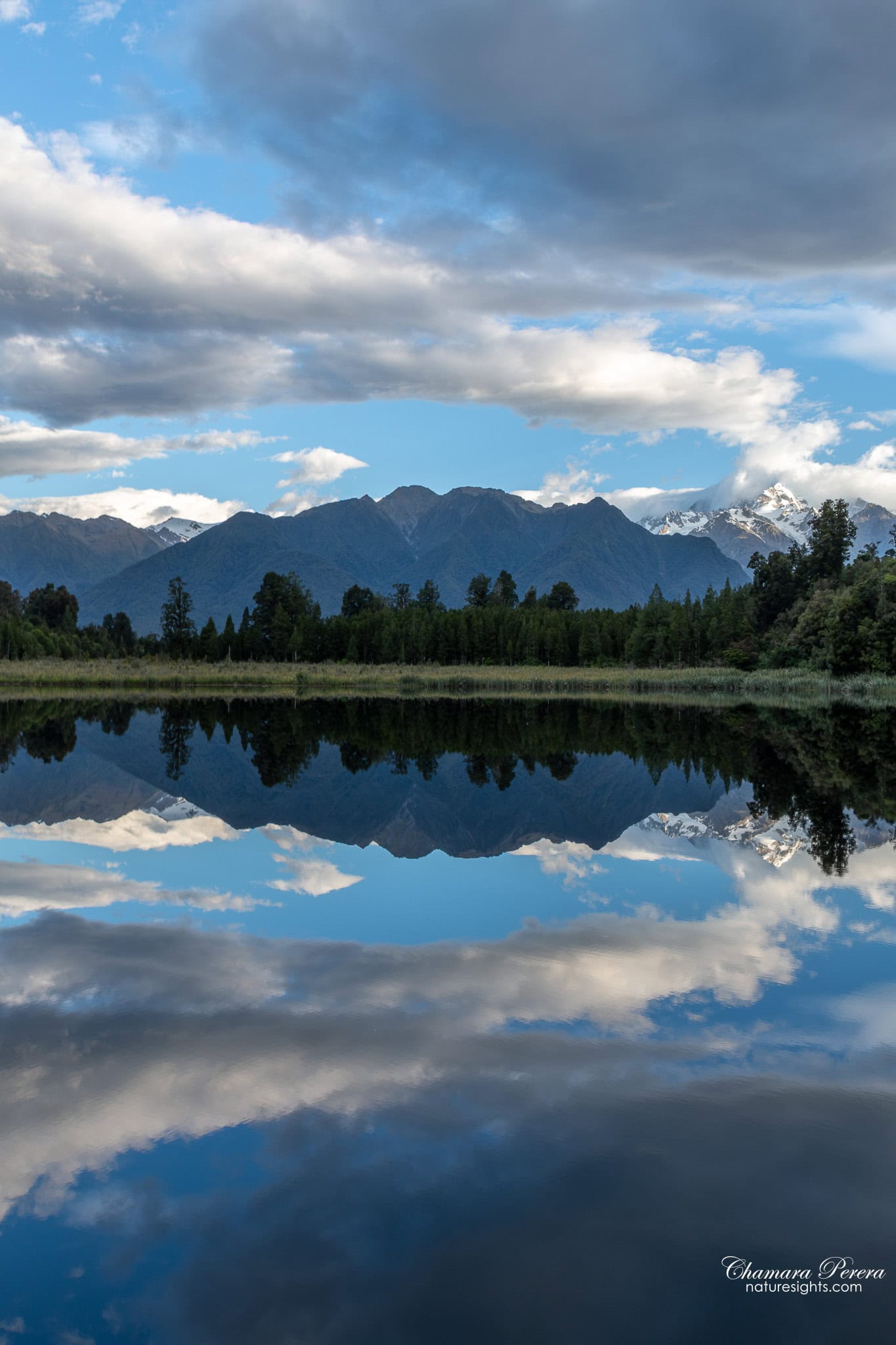
I went to Lake Matheson twice. The first evening I arrived about 90 minutes before the light went and the lake was completely still. Aoraki/Mount Cook was catching the last sun above the cloud layer, that light going orange and pink while the reflection held it all. I stayed for almost two hours.
The next morning I went back before sunrise to try for the reflection in softer light. The birds had other ideas – ducks were moving across the surface from first light, leaving rings spreading in every direction. I waited about half an hour, accepted it wasn’t happening, and went back to Fox Glacier Lodge for breakfast.

What is Lake Matheson?
The Lake Matheson turn-off is easy to miss. It’s 5 kilometres west of Fox Glacier village down a side road, inside Westland Tai Poutini National Park, and there’s nothing from the highway that tells you what’s down there.
The lake is about 14,000 years old. A glacier retreated, left a hollow, and the hollow filled with water. The Māori called it Te Ara Kairaumati and came here for food. Now people come for photographs.
The water looks almost black in low light – tannins from the surrounding forest have been seeping in for thousands of years and staining it dark. That darkness is what makes the reflection work. When the air is completely still, Aoraki/Mount Cook and Mount Tasman reflect into the surface so completely that it takes a second to work out which half of the image is actually sky.
The Lake Matheson walk
The walk is a loop of around 4.4 kilometres from the car park. DOC rates it easy, and that’s accurate – the path is well-formed, there’s no significant climbing, and it’s good underfoot even after rain. Most people finish the full loop in about an hour, though the reflection viewpoints slow that down.

The track starts at the car park and enters the forest within a few minutes. There’s a section of mossy rainforest that feels very West Coast – dense, damp, ferns and kahikatea overhead. Then the trees open and the lake appears.
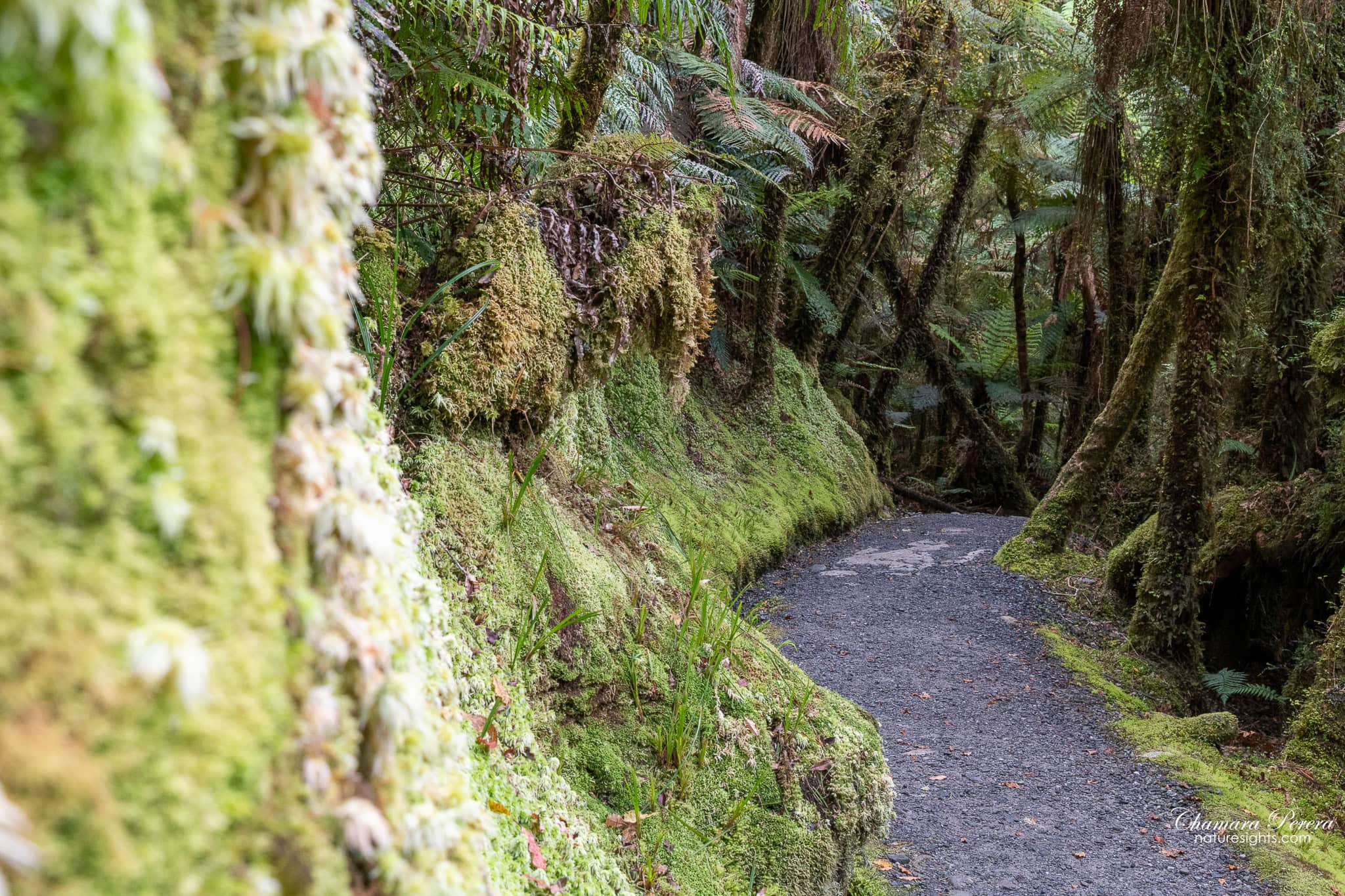
There are two main viewpoints. The first is View of Reflections, about halfway around the lake – where most of the Instagram shots come from. The second, further around, is View of Views. It’s slightly elevated and gives a wider look across the lake to both mountains. Do the full loop rather than turning back at the first viewpoint. The far side of the lake is different country – more open, different angles on the peaks – and the walk back through the forest on the return leg is easy enough to enjoy.
Entry is free. There are toilets at the car park. Lake Matheson Cafe is right at the entrance and open daily.
The reflections
Wind is the main variable. Even a light breeze puts enough movement on the water to break up the mirror. Calm conditions are most common in the early morning and in the evening around sunset – these are the two windows that work. Midday is usually too late.

The evening of my first visit I arrived at the View of Views about 90 minutes before the light went and the lake was completely still. Aoraki/Mount Cook was catching the last sun above the cloud layer, that light going orange and pink while the reflection held it all. I stayed for almost two hours.
The next morning I went back before sunrise hoping for mist and softer light. But ducks were moving across the surface from first light and the ripples never cleared. If you go early morning, get there well before sunrise and be patient at the viewpoint. The birds are the variable you can’t control.


Clouds on the mountains don’t necessarily kill the shot. Some of my best images from that evening had cloud drifting around the summits – it adds movement and the reflection tracks every bit of it. Wind kills the shot. Cloud doesn’t.
Wildlife and nature
The forest section of the track is dense West Coast bush – kahikatea, rimu and matai right to the water’s edge, the kind of place where the light changes the moment you step off the open section.
The lake shallows have a regular cast: grey ducks, paradise shelducks, pied stilts. They were the reason my morning visit didn’t work out – birds moving on the water at first light, ripples going everywhere before the sun was even up.
Further around the track the bush opens up and the Fox Valley flat appears below. That’s where I came across the cattle – standing in the paddocks with the full wall of the Southern Alps behind them.

Based on two visits, I’d go in the evening first. The light on the peaks is better, there’s less bird movement on the water, and the long slow drop toward dark gives you time to try different compositions. Come back early morning if you want softer light or mist on the water – but plan to be at the viewpoint before first light and accept that birds may still move on the surface.
If there’s any wind when you arrive, walk the full loop, get a coffee at the cafe, and check back in half an hour. Conditions change fast on the West Coast, and a breeze that’s there at 5pm can drop completely by 6.30.
Go to View of Views rather than stopping at View of Reflections. The further platform gives you more of the lake and both peaks in the frame – wider, more open, better for including the sky and its reflection together.
I shot on a Nikon D850 with the Tamron 24-70mm f/2.8. The 24-70 range covers most compositions here – 24mm wide for the full lake with sky, 50-70mm to isolate the mountains and their reflection.
How to get to Lake Matheson
The lake is 5 kilometres west of Fox Glacier township. The road is sealed the entire way and takes about 10 minutes from the village. There’s a large car park at the end of Lake Matheson Road.
- From Fox Glacier village: 5km, about 10 minutes
- From Franz Josef: 25km, about 25 minutes south on State Highway 6
- From Hokitika: 145km, about 1 hour 45 minutes south on SH6
- From Queenstown: 370km, about 4 hours via Haast Pass and SH6
No public transport to the lake. Hire cars aren’t available in Fox Glacier itself – the nearest pickup is Franz Josef. Most people visiting the Fox Glacier area pick up a hire car in Queenstown or Christchurch and drive the West Coast.

Best time to visit
The lake doesn’t close and the walk is doable year-round.
I went in December, which is midsummer. The light lasts well past 9pm, so there’s no rush for an evening session – you have hours to work with. The car park was busy but once people spread out along the track the lake itself never felt crowded.
Autumn (March to May) would be worth trying – fewer people and more settled weather than summer. I only have December to compare against, but the evening light in April and May is said to have more warmth to it.
Winter (June to August) brings more rain and wind, but also snow on the peaks when it clears. The road to the lake stays open in all but extreme weather. More failed attempts, but the shots when conditions do align are hard to match.
Spring (September to November) is unpredictable, though the snowline is usually still low and the forest is fresh. Check the forecast before planning any evening visit.
Whatever the season, the timing is the same: 90 minutes before sunset for evening light on the peaks, or before sunrise if you’re trying for the morning.
Where to stay
I stayed at Fox Glacier Lodge, using it as a base for both Franz Josef Glacier and Lake Matheson. Comfortable rooms, about 15 minutes from the lake. The lodge is in Fox Glacier village itself.
Fox Glacier village is small – one main road, a handful of accommodation options, a few restaurants and cafes. Staying here means less driving to the lake than if you’re based in Franz Josef, though both towns are close enough to use as a base for both.
Practical tips
- Entry is free, no booking needed
- The car park is sealed with toilets and the Lake Matheson Cafe on site
- The walk is easy, suitable for most fitness levels; sturdy shoes beat sandals, especially in wet conditions
- Allow 1 to 1.5 hours for the full loop, longer if you’re waiting for the right light at the viewpoints
- The cafe is open daily – good for coffee before heading out or warming up after
- Check DOC rules before flying a drone – national park regulations apply
- The West Coast gets heavy rainfall; rain usually brings wind, so check the forecast before planning any evening session
FAQs
Is Lake Matheson worth visiting?
Yes, if you’re already on the West Coast near Fox Glacier or Franz Josef. The walk itself is pleasant and the forest is good enough to enjoy even without reflections. But the mirror lake is the reason people come, and that needs calm conditions – plan around an early morning or evening visit rather than rushing through during the middle of the day.
What is Lake Matheson famous for?
The reflection of Aoraki/Mount Cook and Mount Tasman in its dark water. The brown colour comes from organic matter leaching out of the surrounding forest floor. When the air is still, the surface turns mirror-like and both mountains reflect cleanly into the lake – on good days you genuinely can’t tell the image from the real thing.
How long does it take to walk around Lake Matheson?
The full loop is about 4.4 kilometres and takes 60 to 90 minutes at a comfortable pace. There’s no significant elevation change. Most people slow down at the viewpoints, especially if conditions are good, so allow extra time if you’re there with a camera.
When is the best time to visit Lake Matheson for reflections?
Early morning before wind picks up, or evening when it drops. Morning can be disrupted by birds moving on the water. Evening tends to be more reliable and the light on the mountains is often better. Aim to arrive about 90 minutes before sunset. Overcast days with no wind can produce good reflections too.
Getting the shot at Lake Matheson
Lake Matheson is patience. The photography isn’t hard – getting there at the right time, in the right conditions, with no wind, is the challenge. Come back twice if you have the time. The first visit will tell you exactly where to stand. The second one, if conditions behave, is when you actually get the shot.
If you’re planning a West Coast road trip from Queenstown north to Greymouth, Lake Matheson belongs on the itinerary. Pair it with a helicopter flight to Franz Josef Glacier the day before and you have two of the best natural experiences the South Island offers back to back. Continue north and you’ve got Hokitika Gorge and the Pancake Rocks at Punakaiki still ahead.
Give the evening visit a proper chance. Stay for the full session. If the wind holds off, you’ll understand why people bother going back twice.
