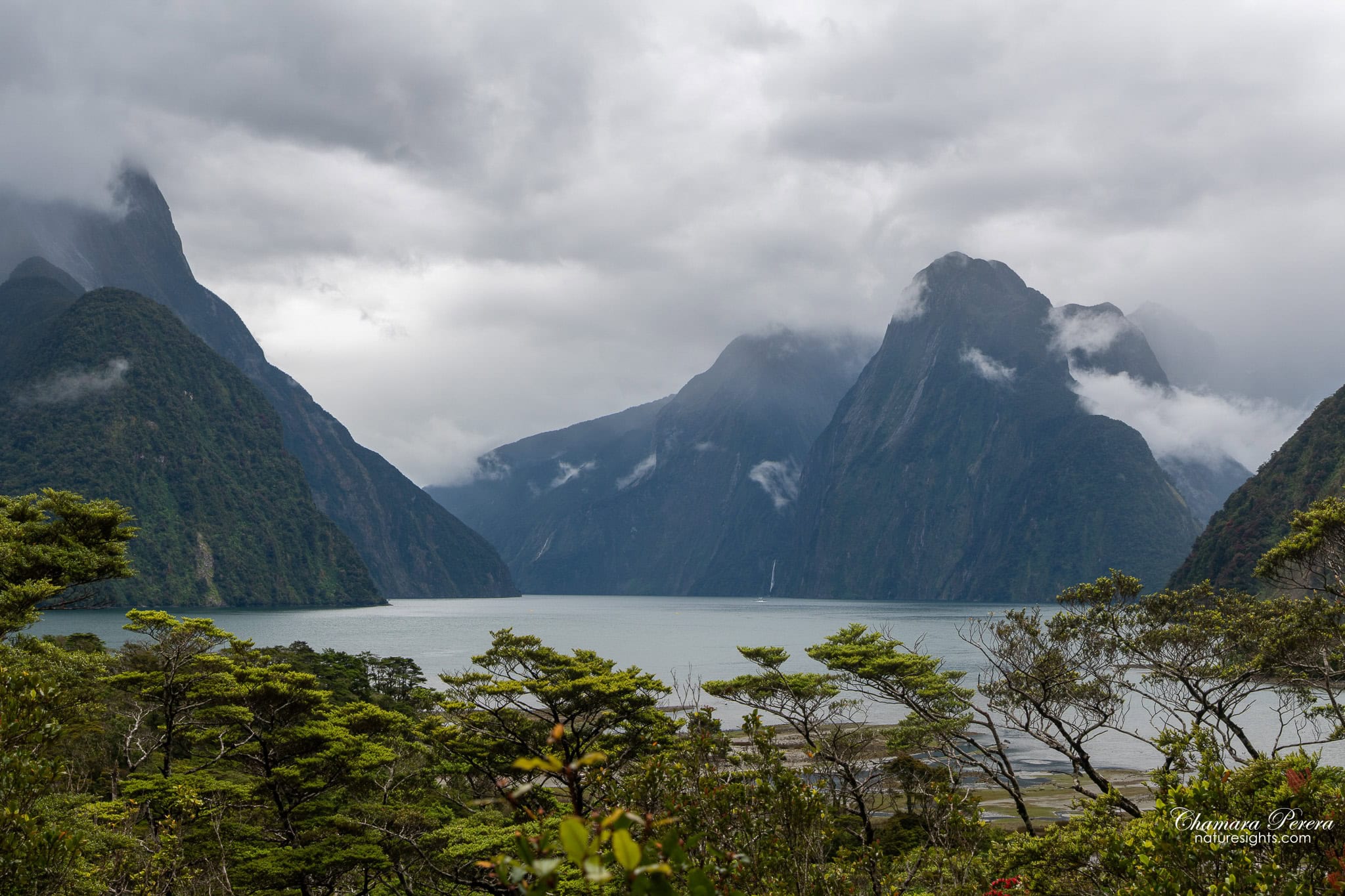
The day I did the Milford Sound cruise, it rained. Not a light drizzle – proper Fiordland rain that turns every cliff face into a waterfall. I had gone in half-expecting to be disappointed by the weather. That did not happen.
Milford Sound gets around 7,000mm of rain a year. On a wet day, water pours off every surface of those black granite walls – hundreds of temporary falls running alongside the permanent ones. The version of Milford Sound that most travel photos show is the clear-sky Mitre Peak shot. The rain version is something different, and I am glad I got it.
I drove from Te Anau, boarded the RealNZ Scenic Cruise, and spent two hours on the water watching those walls slide past.
The drive from Te Anau to Milford Sound
The drive from Te Anau to Milford Sound is about 120km and takes between 2 and 2.5 hours without stops. It is a single road – State Highway 94 – and there is no alternative.

The road starts through dense beech forest. The canopy closes over the road and the light turns green. Past the forest the landscape opens into wide river flats before closing again as the valley narrows.


The Homer Tunnel is 1.2km through solid rock and traffic-light controlled. In peak season the wait at the lights can be significant. After the tunnel the descent into the Milford Sound basin is sharp – the road drops fast and the landscape changes completely. Waterfalls start appearing above the road almost immediately.

Leave earlier than you think you need to. At least 30 minutes beyond your normal estimate, more in December and January. If you have a booked cruise and get stuck behind coaches at the tunnel, the anxiety climbs fast. I left Te Anau 2.5 hours before departure in summer and felt comfortable. In peak December and January I would add another 30 minutes.
Parking at Milford Sound
The cruise terminal is at the Milford Sound Wharf, also called the Deepwater Basin. There is a free car park at Deepwater Basin – that is where I parked. It was not full when I arrived but I was there well before the cruise. There is also a paid car park option if the free one is full.
Arrive at the car park at least 30 to 40 minutes before your booked departure. Walking to the terminal, checking in, and getting settled takes time. And have your sandfly repellent out before you open the car door – more on that below.
The RealNZ Milford Sound Scenic Cruise
RealNZ is the main cruise operator at Milford Sound and offers several options. I took the 2-hour Scenic Cruise, which goes the full length of the sound to the Tasman Sea and back. There is a shorter 1-hour nature cruise that turns before reaching the open sea – worth knowing before you book.

The vessel is a proper cruise boat – stable on the water, with an enclosed cabin, seating, and a small cafe below deck. Most people move between the cabin and the open deck depending on how wet it gets. I stayed outside almost the entire time. Dress for rain and the open deck is fine. The spray from Stirling Falls will reach you at the bow regardless – have a lens cloth ready if you are shooting.
You can book directly with RealNZ. The cruise is also available through Klook. Australian visitors should check their NRMA or RACQ membership before booking – both offer discounts on RealNZ experiences including the Milford Sound cruise.
Milford Sound from the water

From the terminal the fjord looks wide and impressive. From the water it looks different again – the walls feel closer, taller, and more complete. On a clear day you get Mitre Peak sharp against blue sky. On a cloudy day the peak sits in and out of cloud and the walls take on a darker, closer quality. I shot more photos on my cloudy day than I would have in direct sun.

The cruise heads west from the terminal toward the Tasman Sea. On the way out you pass the main walls on the southern side, close enough to see the grain of the rock and the way the native bush clings to every crack and ledge.


The Tasman Sea end

The cruise goes all the way to the Tasman Sea mouth before returning. This is the widest part of the sound and the view back toward the mountains from here is the broadest you get. There are usually a few other boats visible, including smaller vessels and the occasional sailing boat.


The waterfalls
The waterfalls are what most people come for and they are better in rain. Two permanent waterfalls run regardless of recent weather. The rest depend on rainfall – after a wet night, dozens of temporary falls appear across every cliff face in the sound.
Bowen Falls
Bowen Falls is 162 metres and sits at the Te Anau (eastern) end of the sound, close to the cruise terminal. The boat passes it on the way out and again on the way back. It runs year-round and is visible from the wharf.


Stirling Falls
Stirling Falls is 155 metres and sits about halfway along the sound on the southern wall. This is the one the cruise boats pull directly up to – close enough that the mist reaches the open deck.


Temporary falls
After rain, the entire sound fills with falls that exist nowhere on any map. Every drainage line, every gully, every crack in the rock that holds water sends it down the walls.


Wildlife at Milford Sound
New Zealand fur seals
New Zealand fur seals haul out on the rock ledges along the sound walls. The boat passes close to their resting spots – you can usually pick them out without binoculars if you know what to look for. They tend to look like wet dark boulders until one of them moves.
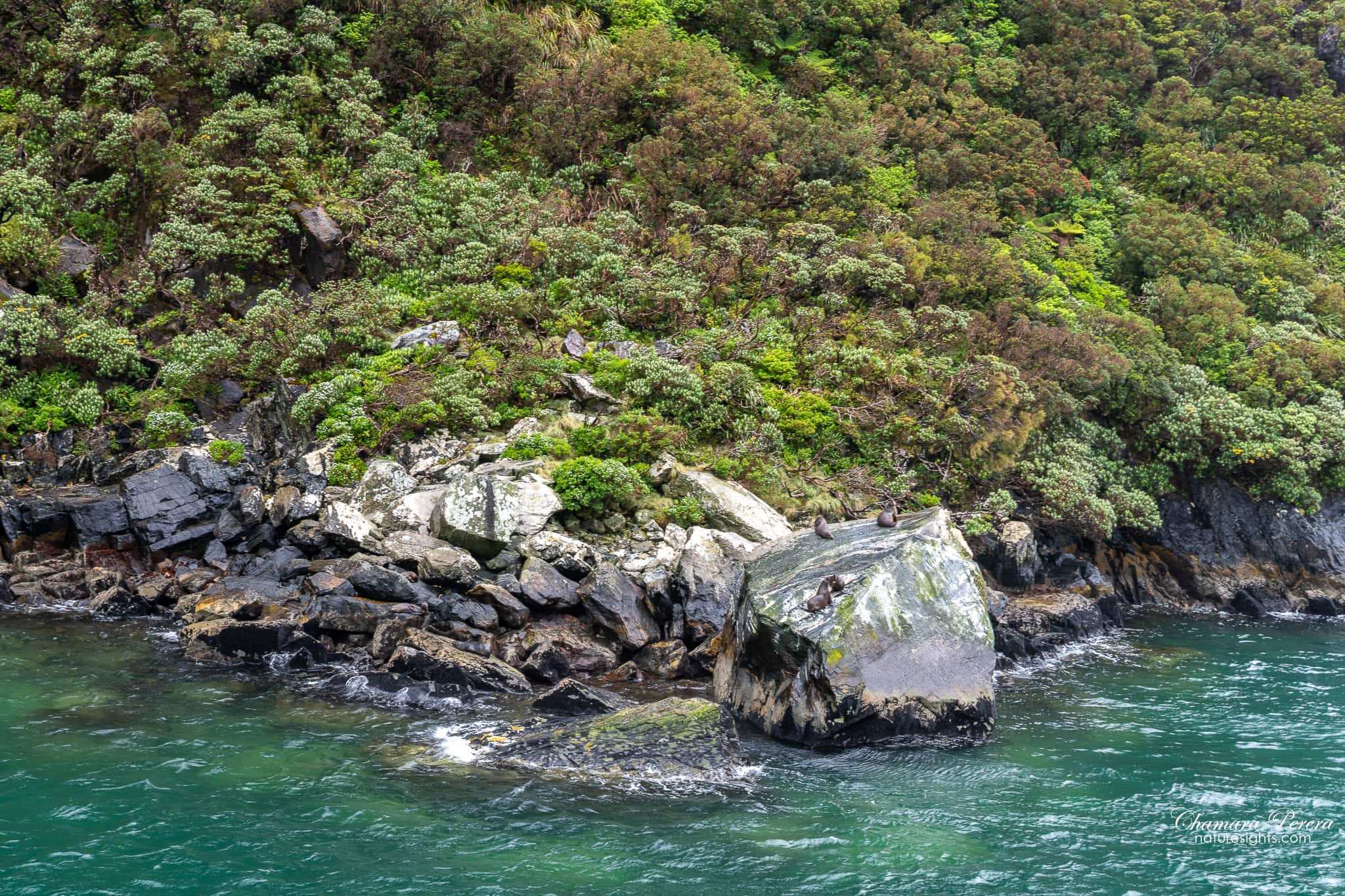


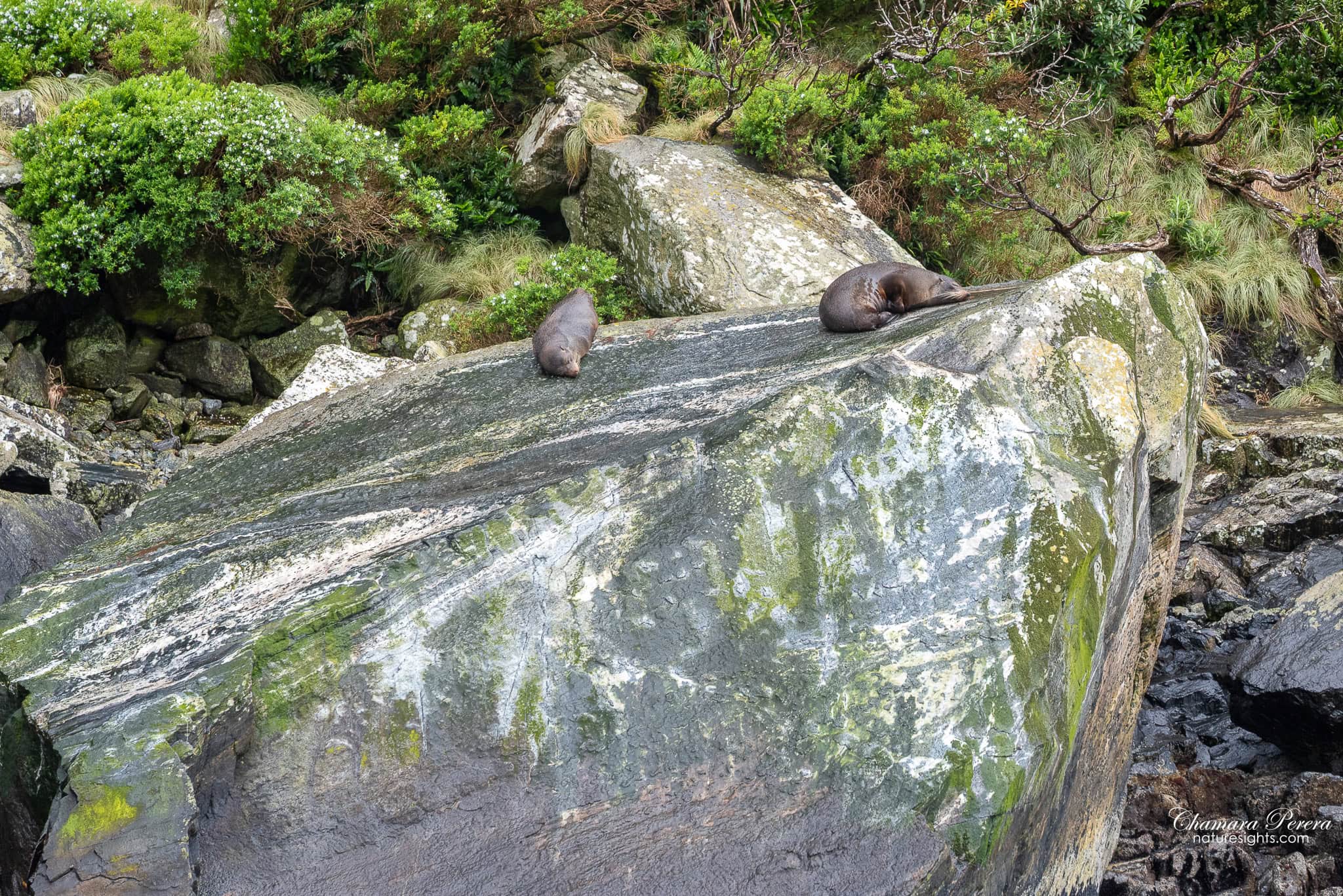
Bottlenose dolphins are regularly seen in the sound, particularly toward the Tasman Sea end. I did not see any on my visit. Fiordland crested penguins are occasionally spotted – small and dark, usually sitting low in the water near the rock walls. Look at the waterline as you pass rocky shores and look twice at anything that seems out of place.
Photography tips
Overcast and rain are easier conditions to work with at Milford Sound than direct sun. The walls face multiple directions and in harsh sun half of them are in deep shadow. In soft cloud light everything holds detail.
I used the Nikon D750 with the Tamron 70-200mm f/2.8 G2 for waterfall shots and the seal colony. The reach is useful – Stirling Falls fills the frame at 200mm from the boat deck and the compression makes the cliff face feel appropriately imposing. I switched to the Nikon D850 with the Tamron 24-70mm f/2.8 G2 for wider fjord views and context shots that include the boat wake, the full width of the sound, or the peaks above.
Things that helped specifically:
- Stand at the bow when the boat approaches Stirling Falls. The view is unobstructed and you get the full drop without any superstructure in frame. Have a lens cloth ready – the spray is real.
- The back deck has the boat wake disappearing into the distance with both walls on either side. It is a less obvious shot than the bow angles but worth doing.
- For the temporary falls on the cliff walls, a longer focal length helps isolate individual falls against the rock. The 70-200mm works well at this.
- The drive in produces some worthwhile shots. The road waterfalls above the highway before the tunnel are best shot from a safe pull-off or, if there is none, from the passenger seat window with the iPhone. The blurred foreground from a moving car is not necessarily a problem.
The sandflies
The sandflies are the thing nobody warns you about until you are already being eaten alive.
On the boat, on the open deck with wind moving, they are not a significant problem. On land – in the car park, at the terminal, at any roadside stop – they are relentless. They find you within seconds of stopping and they bite through thin clothing.
Apply DEET-based repellent before getting out of the car at the Deepwater Basin. Reapply at any stop along State Highway 94. Natural repellents are better than nothing but considerably less effective than DEET. Keep the repellent in a pocket you can access without opening a bag.
Best time to visit Milford Sound
Autumn, roughly March to May, is where I would point most people. Crowd numbers drop after the summer peak, weather is still reasonable, and the beech forest on the drive in shows colour. I visited in summer.
Summer, December to February, has the best odds for a clear day and the longest light. It also has the most tourists and the longest waits at the Homer Tunnel. If the clear-sky Mitre Peak shot is the goal, summer gives the best chance – though it is still not guaranteed.
Winter, June to August, brings snow to the peaks and a different atmosphere altogether. The road can close after heavy snowfall and the Homer Tunnel area carries avalanche risk in extreme conditions. Check road status before committing. If it is open, the winter version of this drive is worth doing.
Spring, September to November: waterfalls are strong from winter rainfall, crowds are manageable, weather is unpredictable.
Rain at any time of year is not a reason to reschedule. My visit was wet throughout and produced better photos than a dry day would have. The temporary falls, the wet rock surfaces, and the cloud in the saddles are all things that require rain.
Where to stay near Milford Sound
Te Anau is the standard base for a Milford Sound day trip and has the widest accommodation range. It is about 120km from Milford and most people drive in for the cruise and return the same evening.
Milford Sound Lodge is the main accommodation option at the sound itself. Staying there is a different experience – you have the fjord before and after the day visitors, and the light in the early morning before the cruise boats start is worth something. But the options in Te Anau are more varied and the town is a reasonable base for the wider Fiordland area.
Practical tips
- Leave Te Anau at least 2.5 hours before cruise departure in shoulder season; 3 hours in peak summer.
- Free car park at Deepwater Basin. Arrive 30 to 40 minutes before departure.
- DEET repellent on before you open the car door at Milford. Reapply at every road stop.
- Waterproof jacket and layers on the open deck regardless of forecast.
- Book the 2-hour Scenic Cruise rather than the 1-hour option if you have time – you need the full length to reach the Tasman Sea end.
- Australian NRMA and RACQ members get discounts on RealNZ experiences – check before booking.
- Available through Klook as well as directly through RealNZ.
Frequently asked questions
What is the best cruise in Milford Sound?
RealNZ runs the most established operation and offers the most options. The 2-hour Scenic Cruise covers the full sound to the Tasman Sea and back, with time at both main waterfalls. Other operators including Mitre Peak Cruises and Southern Discoveries also run cruises if you want to compare before booking. If you prefer to book through a third-party platform, Klook carries the RealNZ cruise with the option to pay and confirm in advance.
Is a Milford Sound cruise worth the money?
Yes. The fjord only makes sense from the water. Standing at the terminal gives you a small slice of it – from the boat you understand the full length, the height of the walls, and the scale of the waterfalls. Even in rain, even without Mitre Peak visible above the cloud, it is worth the ticket price. I would go again without hesitation.
What is the best time of year to go to Milford Sound?
Autumn, March to May, balances manageable crowds, decent weather, and the drive-in scenery at its best. Summer gives the best odds of a clear day but brings the largest crowds. Winter is spectacular if the road is open. Rain at any time of year is not a reason to skip the trip – it adds waterfalls and atmosphere that dry conditions don’t produce.
Where does the Milford Sound cruise depart from?
RealNZ cruises depart from the Milford cruise terminal at the Milford Sound Wharf (Deepwater Basin). The free car park is the closest parking to the terminal. Your booking confirmation from RealNZ or Klook will include specific check-in times and instructions.
How long does the drive from Te Anau to Milford Sound take?
About 120km and between 2 and 2.5 hours without stops. In peak summer add extra time for traffic at the Homer Tunnel, which is single-lane and traffic-light controlled. Leave at least 3 hours before your cruise departure in December and January.
Milford Sound from Te Anau is a full day done properly. The drive in, the cruise, time at the sound, and the drive back. Do not try to squeeze it into a half day and do not leave the cruise booking until the morning. And stop hoping for blue skies. The rain version is something else entirely, and Fiordland delivers it more often than the brochure version.
For more on the South Island, see the New Zealand travel guide and the Haast Pass drive guide for the west coast to Te Anau route.
