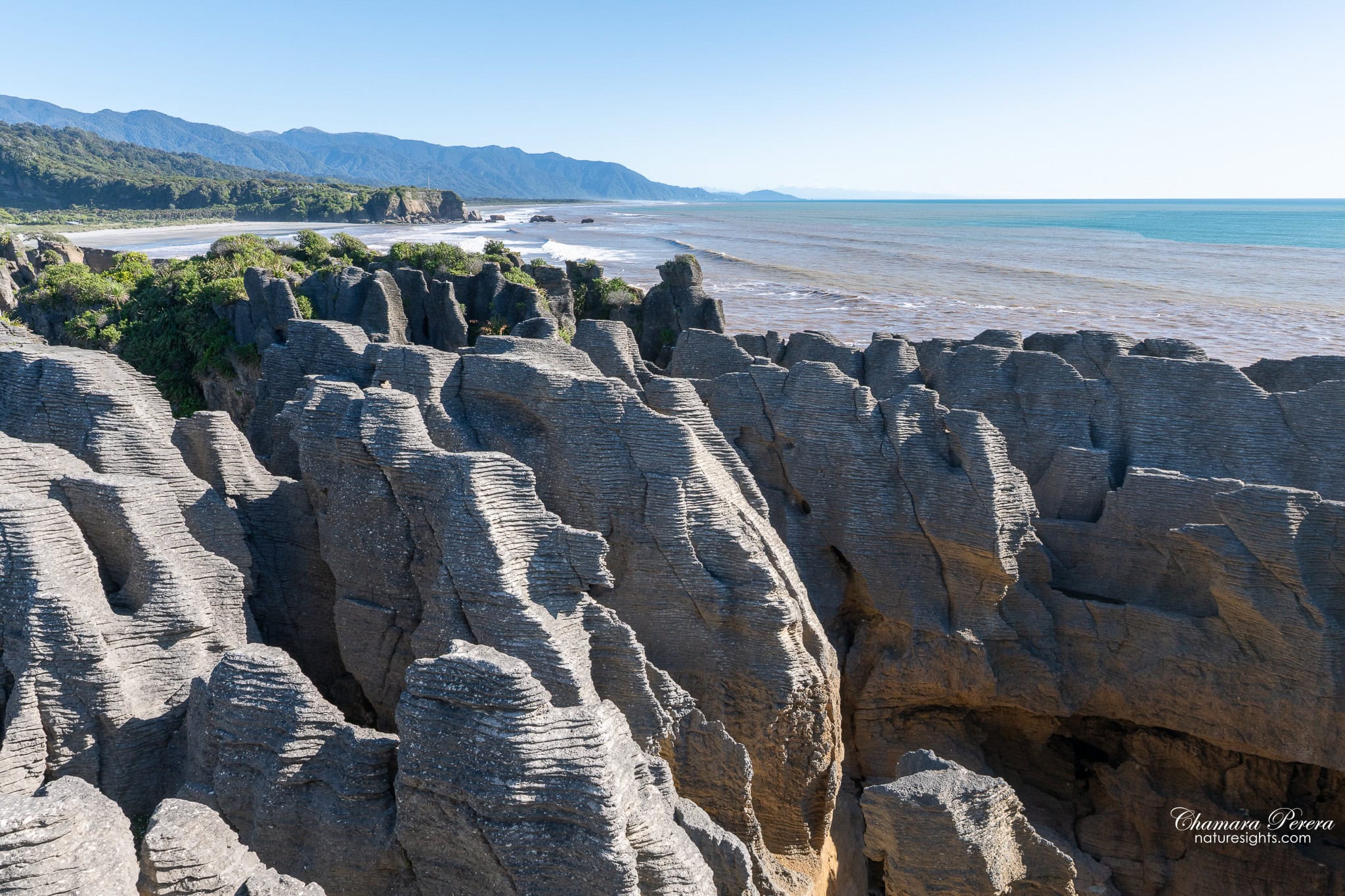
The Pancake Rocks were on our West Coast itinerary and I’ll be honest – I wasn’t sure they’d justify the stop. Weird limestone formations, an hour out of the way, maybe nice. We pulled off State Highway 6 and I changed my mind pretty fast.
They’re bigger than photos make them look. The columns rise 30 metres above the Tasman and they do look exactly like stacked pancakes, which sounds absurd until you’re standing in front of them. The blowholes were only moderately active when we visited – tide was going out – but even that was enough to keep the whole group at the viewing platform longer than we’d planned.

What Are the Pancake Rocks?
The formations are made from alternating layers of hard limestone and softer mudstone. Over roughly 30 million years, wave action undercut the cliffs and carved cracks through the rock. What’s left are stacked columns, some standing 30 metres above sea level, that look uncannily like someone piled thousands of grey pancakes on top of each other.
The blowholes formed where the sea carved tunnels under the rock. At high tide with a decent swell, water rushes into the tunnels, compresses, and explodes upward through surface cracks. On a calm day you’ll see water bubbling. On a stormy day with a big southerly swell, the jets can reach several metres high.
The site is within Paparoa National Park, managed by DOC. You can actually see the formations from the car park – they start before the track does.
The Pancake Rocks Walk
The DOC loop track is 1.1 kilometres and takes around 25 minutes if you keep moving. The path is sealed and mostly flat. Not difficult.
The later platforms, further around the loop from the car park, have the best views – the rocks spread out properly from there rather than just one cluster in front of you. Work your way around before you decide you’ve seen it.
One thing I didn’t expect: the sandflies. They were relentless, especially in the sheltered sections near the vegetation. Bring insect repellent. This is not optional on the West Coast.
There’s a small information shelter at the track entrance with panels on the geology. Worth reading before you walk – it helps you see what you’re looking at rather than just grey rock.
The Blowholes
The main blowhole is about halfway around the loop, with a dedicated viewing platform right at the edge. When I visited, the tide was dropping. I got moderate activity – occasional bursts of spray, nothing dramatic. Still worth watching. People were stopping and waiting for each burst.
To see them properly: check tide times before you go (high tide is optimal) and hope for a westerly swell from the Tasman. If you arrive and the sea looks flat, the blowholes will be quiet. The rocks are still worth seeing, but you’ll miss the full effect.
The platform gets crowded mid-morning when tour buses pull in. Early morning or late afternoon gives you more room and better light.

Photography Tips
Best light is early morning. The sun comes from the east and hits the rock faces directly. By mid-morning the light flattens out and the shadows in the crevices go harsh.
Upper platforms looking south give you the full sweep of the coastline, with the Southern Alps behind on clear days. I shot this at 70mm on a 24-70mm – the compression flattens the layered texture into something more graphic than wide angle does.
If you wait at the main blowhole platform and shoot tight when it fires, you can get the water mid-air. Takes patience.
The beach below the formations is worth the detour for a different angle. The cliff faces at sand level show the alternating limestone and mudstone bands up close. Wider than you can get from the track above.
A polarising filter helps with the glare off wet rock. The limestone is dark grey and wet areas blow out easily in direct light.


Punakaiki Beach
There’s a path down to the beach below the main viewing area. It’s not prominently signposted – I nearly missed it. The beach is a wide grey-sand bay with the layered limestone cliffs rising on both sides.
From the sand you can see the alternating bands of hard and soft rock clearly. Better than any of the DOC panels at explaining what you’re looking at. The sandflies follow you down here too. Keep moving.
The beach gets afternoon sun. It was deserted when I visited, which was unexpected given how busy the track was.

How to Get to Pancake Rocks
Punakaiki is on State Highway 6, the main West Coast road on the South Island.
- From Greymouth: 43km north, around 35 minutes
- From Westport: 56km south, around 50 minutes
- From Franz Josef: 189km, around 2 hours 30 minutes
There’s a large free car park right at the rocks. It can fill up in peak summer, but there’s overflow space along the highway shoulder.
I visited after coming off the TranzAlpine train from Christchurch and picking up a hire car in Greymouth. That combination – train through the mountains, then self-drive down the coast – worked well for this part of the South Island.

Best Time to Visit Pancake Rocks
Summer (December to February) has the most reliable weather and longer days. The West Coast is the wettest region in New Zealand though – clear days aren’t guaranteed regardless of season. I visited in autumn and had a perfect morning. The light was better than it would have been in summer.
Go early in the day. The rocks are accessible 24 hours (no gates), and the morning light is better than afternoon anyway. Aim to arrive 30 to 60 minutes before high tide if you want blowhole activity – check tide times for Greymouth, which is the closest station.
Avoid midday in peak summer. That’s when the coach tours arrive and the main blowhole platform stops being enjoyable.
Where to Stay Near Punakaiki
The Punakaiki Resort is right at the rocks – beach-facing rooms, convenient. There are also self-contained cottages and the Punakaiki Rocks Motels nearby. Greymouth, 43km south, has more options: motels, a YHA hostel, B&Bs. Westport, 56km north, is another base if you’re heading up towards the Buller Gorge.
Practical Tips
- Entry is free. DOC doesn’t charge for the track or car park.
- Open 24 hours, no gates. The car park toilets are available during daylight hours.
- There’s a cafe and small shop in Punakaiki village, about 200 metres from the track entrance.
- Sandflies are bad. Bring DEET-based repellent. The sheltered sections near vegetation are the worst.
- The loop track is sealed and mostly flat – accessible for the first section, then some steps on the later platforms.
- No dogs on the track.
- Budget 45 minutes minimum for the loop. Add 20 to 30 minutes for the beach.
- Rain doesn’t wreck the visit. The blowholes are more active in stormy conditions. Bring a waterproof jacket either way.


FAQs
Is Pancake Rocks worth visiting?
Yes – though how much depends on the tide. I arrived as the tide was dropping and got moderate blowhole activity. Decent, not dramatic. People who arrive at high tide with a westerly swell running get a completely different experience. The rocks are worth stopping for regardless. There’s nothing else on the West Coast that looks like this, it’s free, and it takes under an hour. But if you can check the tide times first, do it.
What are the facts about Pancake Rocks?
Around 30 million years ago, remains of dead sea creatures settled on the ocean floor in alternating limestone and mudstone layers. Tectonic activity lifted them above sea level, and wave erosion carved the stacked appearance. The site is in Paparoa National Park, managed by DOC, on the West Coast near Punakaiki.
How long to spend at Pancake Rocks?
The loop track takes around 25 to 30 minutes at a normal pace. Add 20 minutes if you go down to the beach. If you’re timing the blowholes and waiting for good bursts, give yourself 90 minutes. I ended up there for nearly two hours.
How long is the Pancake Rocks walk?
The DOC loop track is 1.1 kilometres, sealed and mostly flat. It takes 20 to 30 minutes and loops back to the car park.
Do the blowholes always shoot water?
No. They’re most active at high tide with a westerly swell. On a flat calm day at low tide you’ll see a trickle at best. Check tide times for Greymouth and aim to arrive within an hour of high tide. The West Coast gets consistent swell from the Tasman Sea, so conditions are usually better here than on the east coast, but a flat day is still a flat day.
I went to Pancake Rocks not expecting much. It was a highway stop, something to break up the drive. I stayed nearly two hours. The blowholes weren’t even firing properly that day – the tide was going out when I arrived. I still didn’t want to leave.
Sort out the sandfly repellent before you get there.
Explore more of New Zealand on NatureSights.
